How Smart Automation Improves Guest Experience and Cuts Operating Costs in Hotels
A look at how centralized guest-room, banquet, and building-wide automation works in practice — deployed across properties from business hotels to international chains.
Why Hotels Are Moving to Centralized Automation
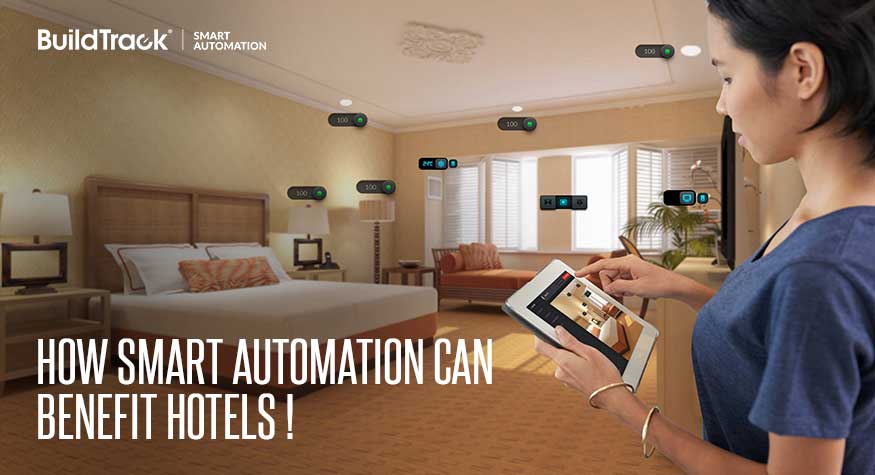
Every hotel runs on the same set of moving parts — lighting, climate control, door access, housekeeping requests, banquet halls, and back-of-house systems like pumps, DG sets, and elevators. Traditionally, each of these is managed separately: guests control their room manually, staff track housekeeping on paper or radio, and engineering monitors building systems from a separate panel entirely.
Centralized automation brings all of it — guest room, banquet space, and building operations — onto one platform, without requiring hotels to rebuild rooms that are already finished and generating revenue.
Guest Room Automation
Indoor and Outdoor Panels
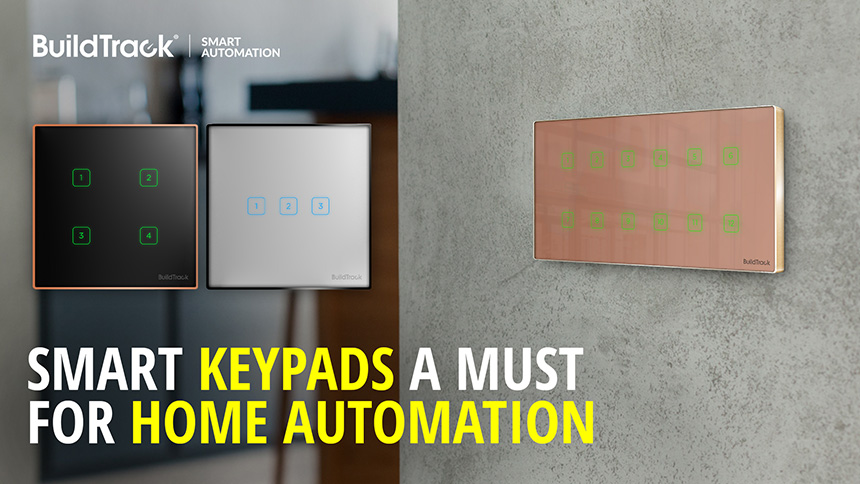
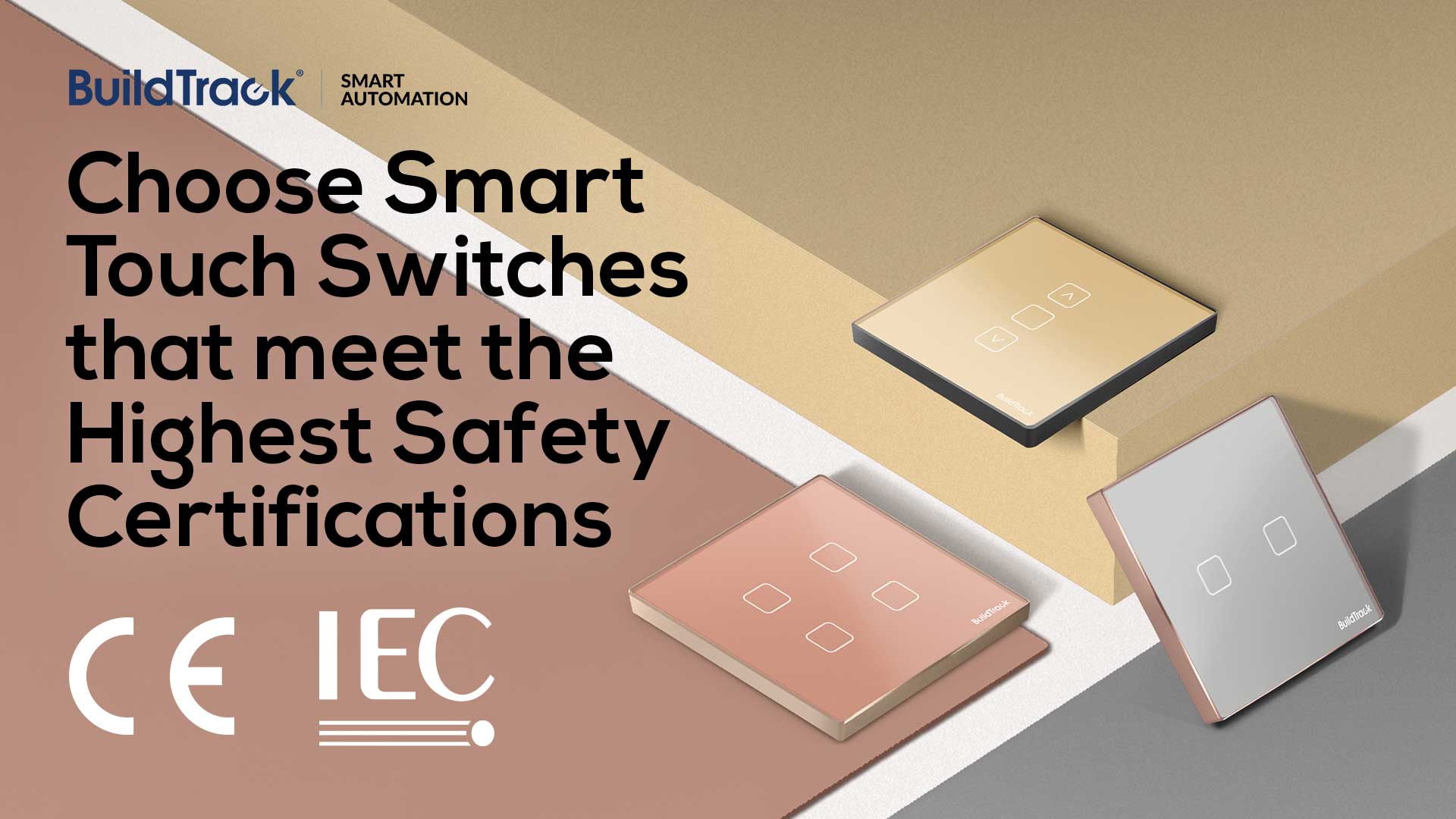
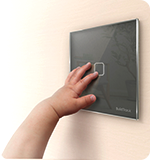
Guest rooms are controlled through wired indoor and outdoor touch panels — tempered-glass switches at the door and bedside that let guests trigger service requests like DND (Do Not Disturb), MMR (Make My Room), and Laundry directly, rather than calling the front desk.
Smartphone-Based Control
Guests can also use their own smartphones to trigger room scenes, manage the AC, and toggle room service indicators — useful for guests who’d rather not learn a new panel, and for hotels that want a contactless option built in.
Occupancy-Based AC and Power Control
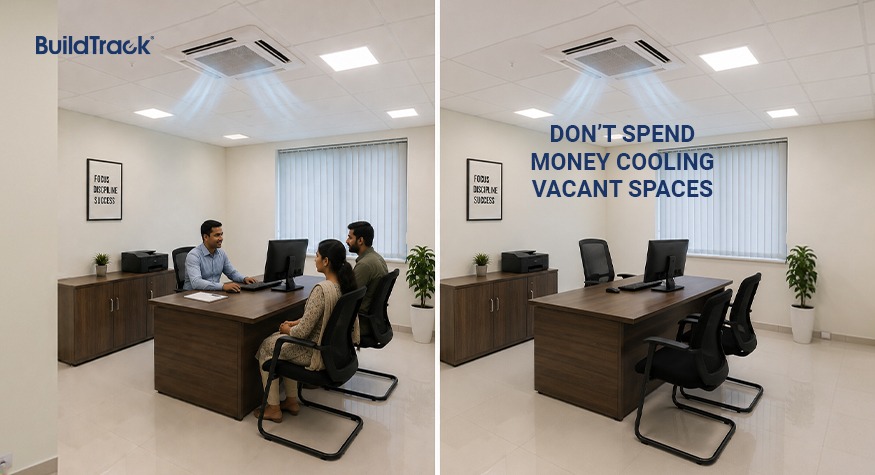
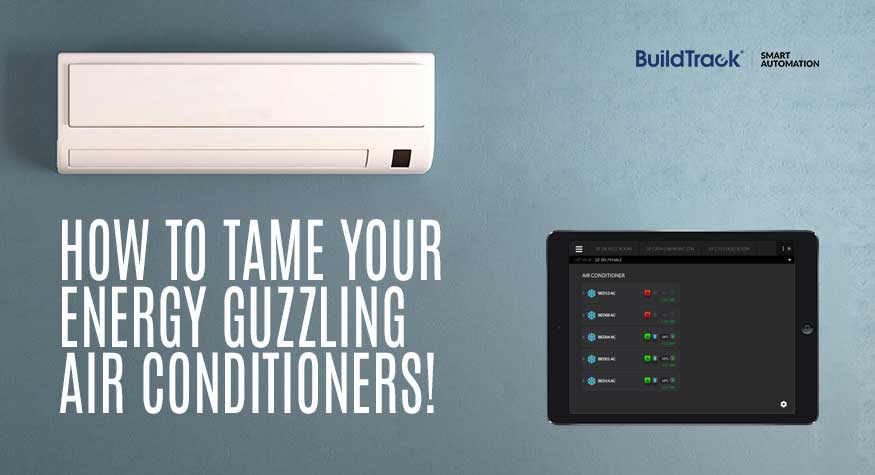
Rather than leaving room AC running regardless of whether anyone’s there, BuildTrack’s retrofit solution ties AC operation to card-key placement — the same card guests already use to enter the room. Motion sensors extend this logic to corridors, bathrooms, and elevators, cutting lighting energy waste in spaces that are only occupied intermittently.
Centralized Monitoring
A single platform links every guest room together, tracking real-time occupancy, room status (DND, made-up, ready for turndown), and service requests as they come in. Staff receive notifications routed to whoever’s assigned to that room — replacing the manual coordination that usually eats into housekeeping response times.
Banquet Room Automation
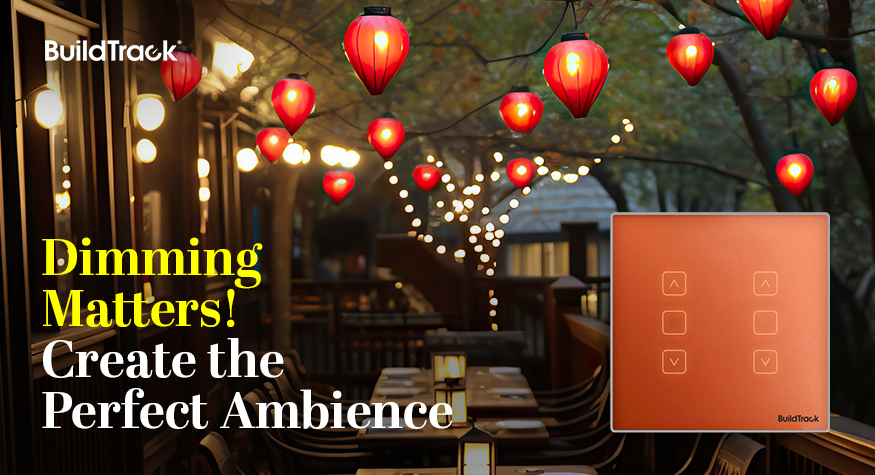
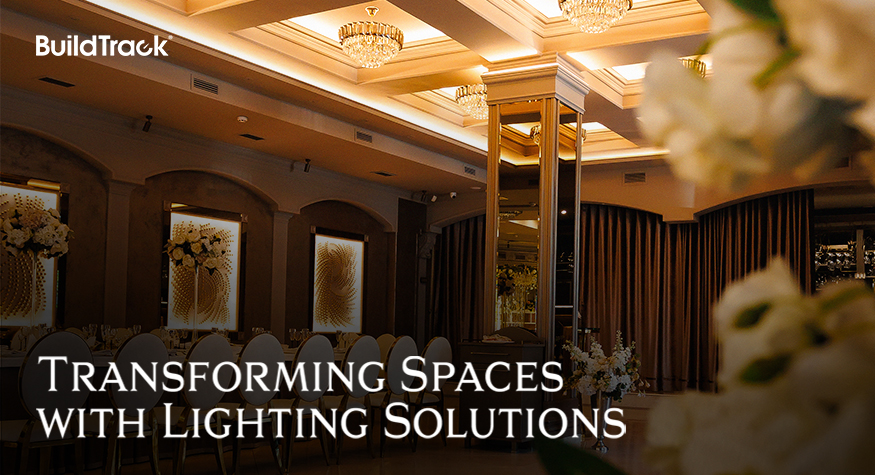
Banquet halls, meeting rooms, and conference spaces have different demands than guest rooms — they need to shift quickly between event configurations rather than stay in one static state. Centralized lighting and AC control lets staff adjust an entire banquet hall from one interface, with DALI-compatible scene control so lighting presets can be triggered from a keypad or smartphone as the room transitions from a conference setup to an evening event.
Hotel Operations Automation
Building Management System
Beyond guest-facing spaces, the same platform extends to the building’s core electrical and safety infrastructure — indoor and outdoor lighting, motors, pumps, DG sets, elevator status, and water tank levels — with central monitoring of safety systems (smoke, gas leak) and security sensors (intrusion, glass break) across the property.
Smart Door Locks
Guest room security runs on Mifare card and mechanical-key door locks with centralized lock-management software, so front desk and engineering can manage access across the property from one system rather than per-lock.
Deployed Across a Range of Properties
This isn’t a theoretical framework — BuildTrack’s hotel automation is running in guest rooms today across business hotels, resorts, and international chain properties, including Holiday Inn, Hyatt Regency, InterContinental Hotels & Resorts, Ramada, Best Western Resort Country Club, Club Mahindra, The Imperial New Delhi, Fort Rajwada, Vijan Business Hotel, and others.
The retrofit approach is the same regardless of property size: existing centralized or decentralized wiring stays in place, rooms stay in revenue-generating condition throughout installation, and the guest-facing panels and door hardware fit into the room’s existing design language rather than requiring a redesign around them.
Getting Started
Hotels evaluating automation don’t need to commit to a full-property rebuild to see the benefit. A single floor or wing — guest rooms plus one banquet space — is usually enough to validate the retrofit approach, the staff workflow changes, and the actual energy and labor savings, before extending it property-wide.







Hello,
This is a blog Section is very nice and creating an information best hotel and it benefits stay in the hotel.